

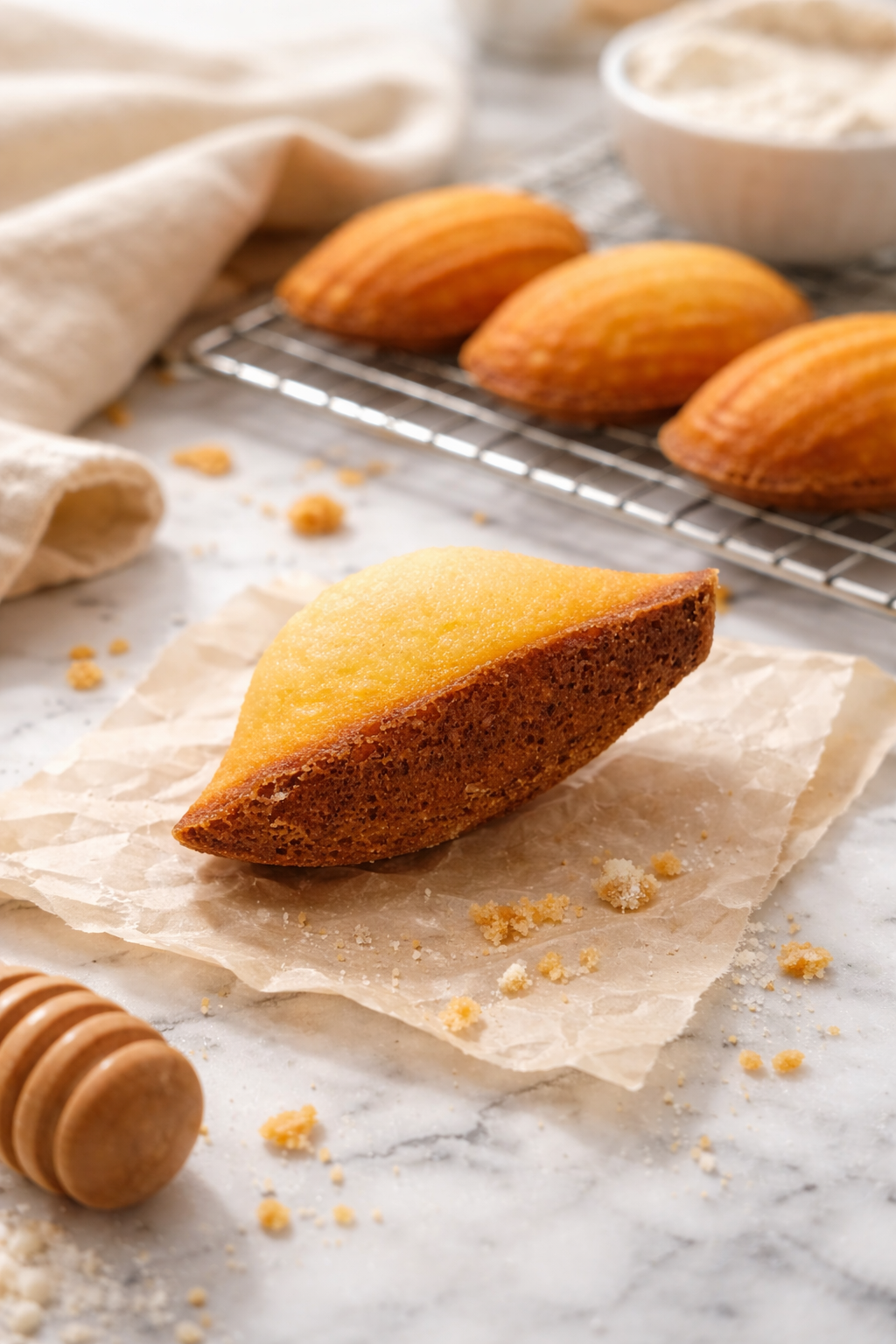
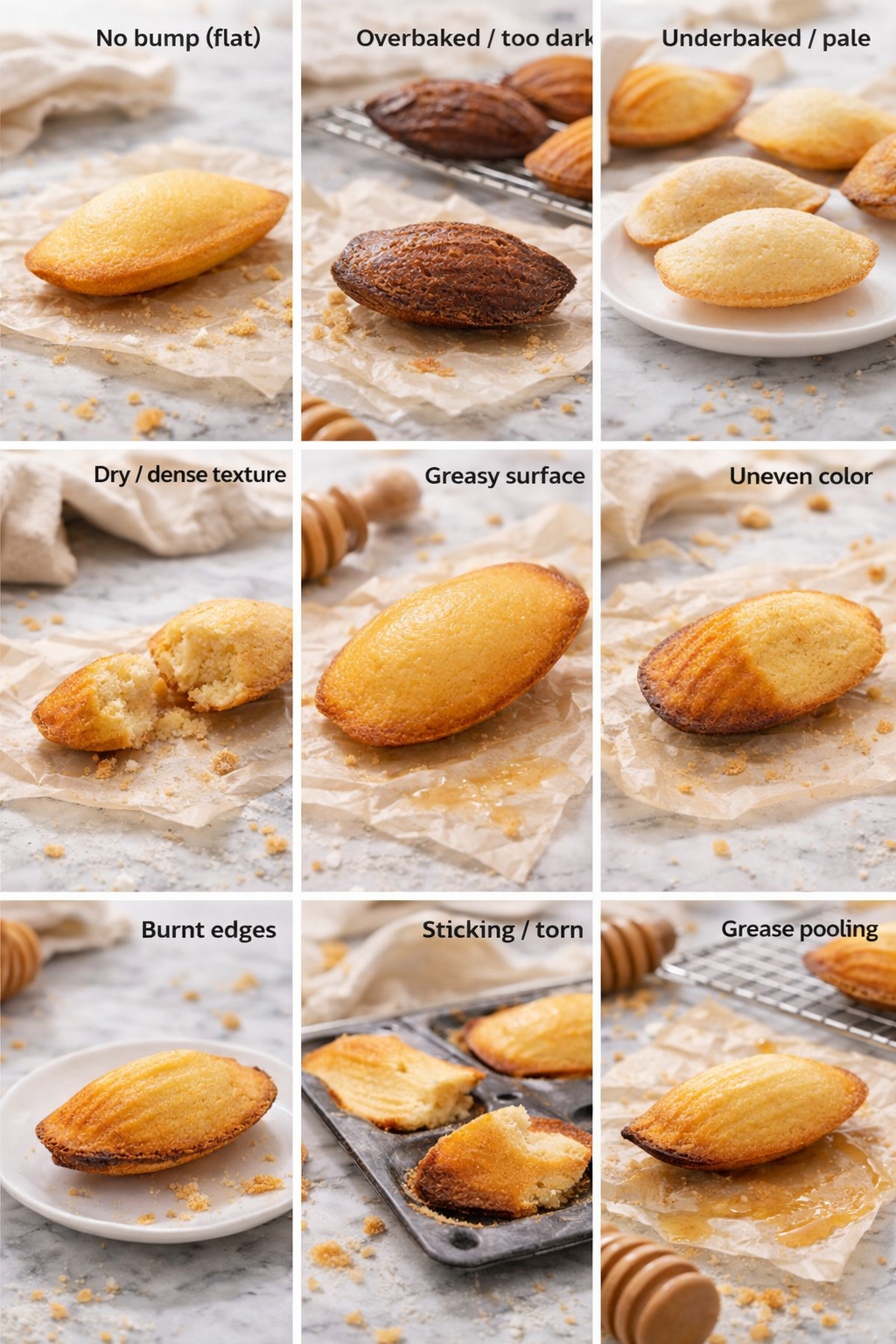
Madeleines are deceptively simple. With just a handful of ingredients, small technical missteps can significantly affect texture, shape, and flavor. This guide addresses the most common issues encountered when making classic French madeleines—specifically honey brown butter versions with a rested batter—and provides precise, experience-backed solutions.
1. No Signature “Bump”
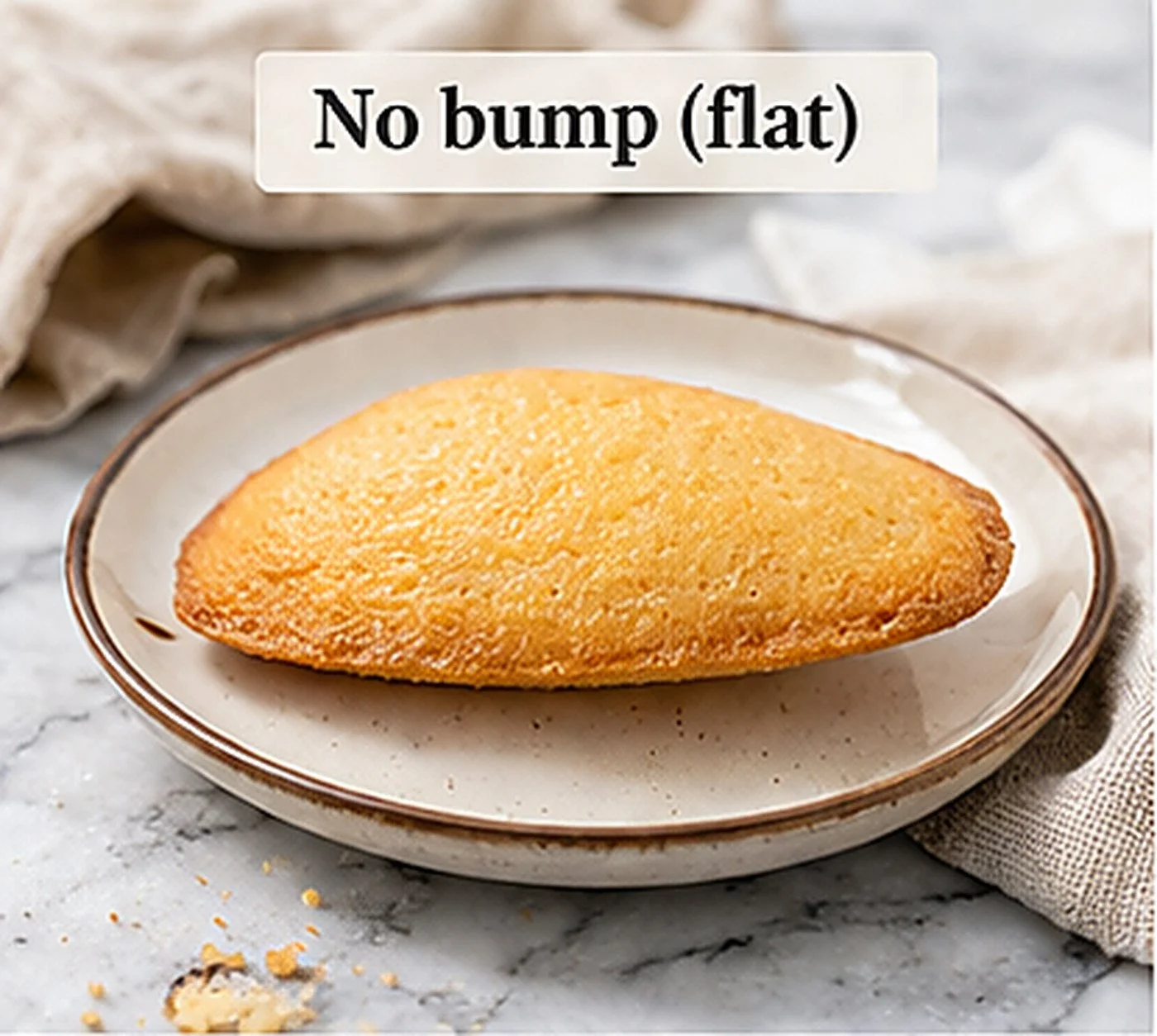
Symptoms: Flat tops, no dome, or minimal rise.
Causes:
Oven not fully preheated.
Batter too warm at bake time.
Insufficient resting period.
Overmixed batter.
Weak thermal shock.
Solutions:
Preheat thoroughly: Ensure the oven has reached 375°F (190°C) for at least 20 minutes before baking.
Bake from cold: Transfer the batter directly from the refrigerator to the oven.
Respect the rest: A 12–24 hour rest is essential for proper hydration and structural integrity.
Fold gently: Avoid excess gluten development by folding the batter by hand.
Bake immediately: Once the molds are filled, put them in the oven right away; do not let filled pans sit on the counter.
Note: The bump forms from rapid steam expansion. Cold batter hitting a hot oven is the essential catalyst.
2. Batter Too Firm to Pipe
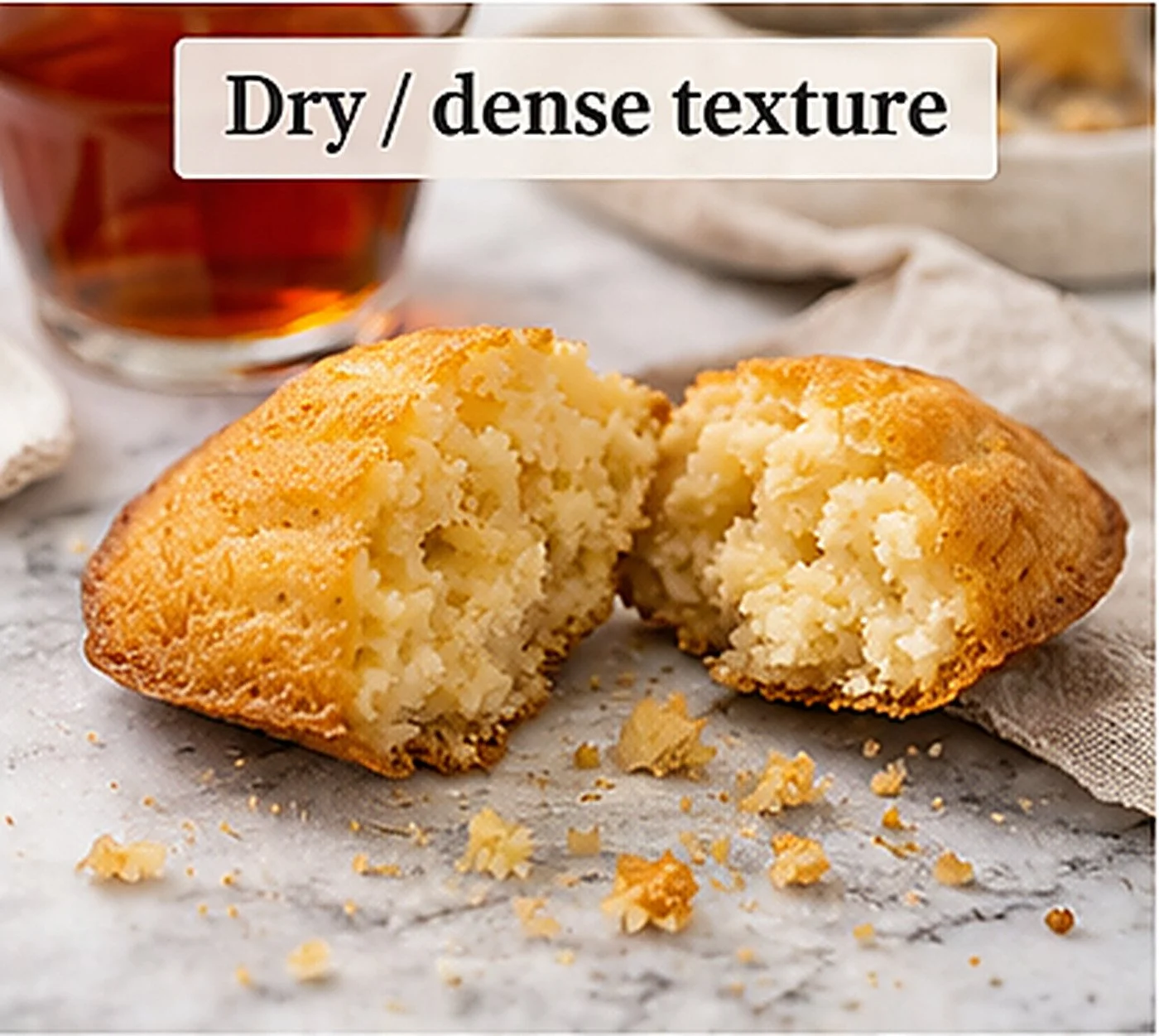
Symptoms: Batter feels hard, dense, or difficult to squeeze after refrigeration.
Causes:
High butter content (specifically browned butter solidifying).
Proper full chilling of the fats.
Honey thickening in cold conditions.
Solutions:
Temper the batter: Let the batter sit at room temperature for 10–20 minutes until it becomes slightly pliable.
Loosen the consistency: Briefly paddle or stir the batter just enough to soften it without warming it up.
Adjust your method: Use a spoon to portion the batter into the molds if it remains too firm for a piping bag.
Note: This firmness is normal. Properly rested madeleine batter should be thick and structured, not fluid.
3. Dense or Heavy Texture
Symptoms: Tight crumb, lack of lightness, or a compact "sponge."
Causes:
Overmixing during preparation.
Insufficient aeration of the eggs and sugar.
Improper flour measurement (too much flour).
Skipping the resting phase.
Solutions:
Aeration is key: Whisk eggs and sugar until the mixture is smooth and noticeably lightened in color.
Sift and fold: Add dry ingredients gently to maintain the air bubbles.
Stop early: Avoid overworking the batter once the flour is incorporated.
4. Dry Madeleines
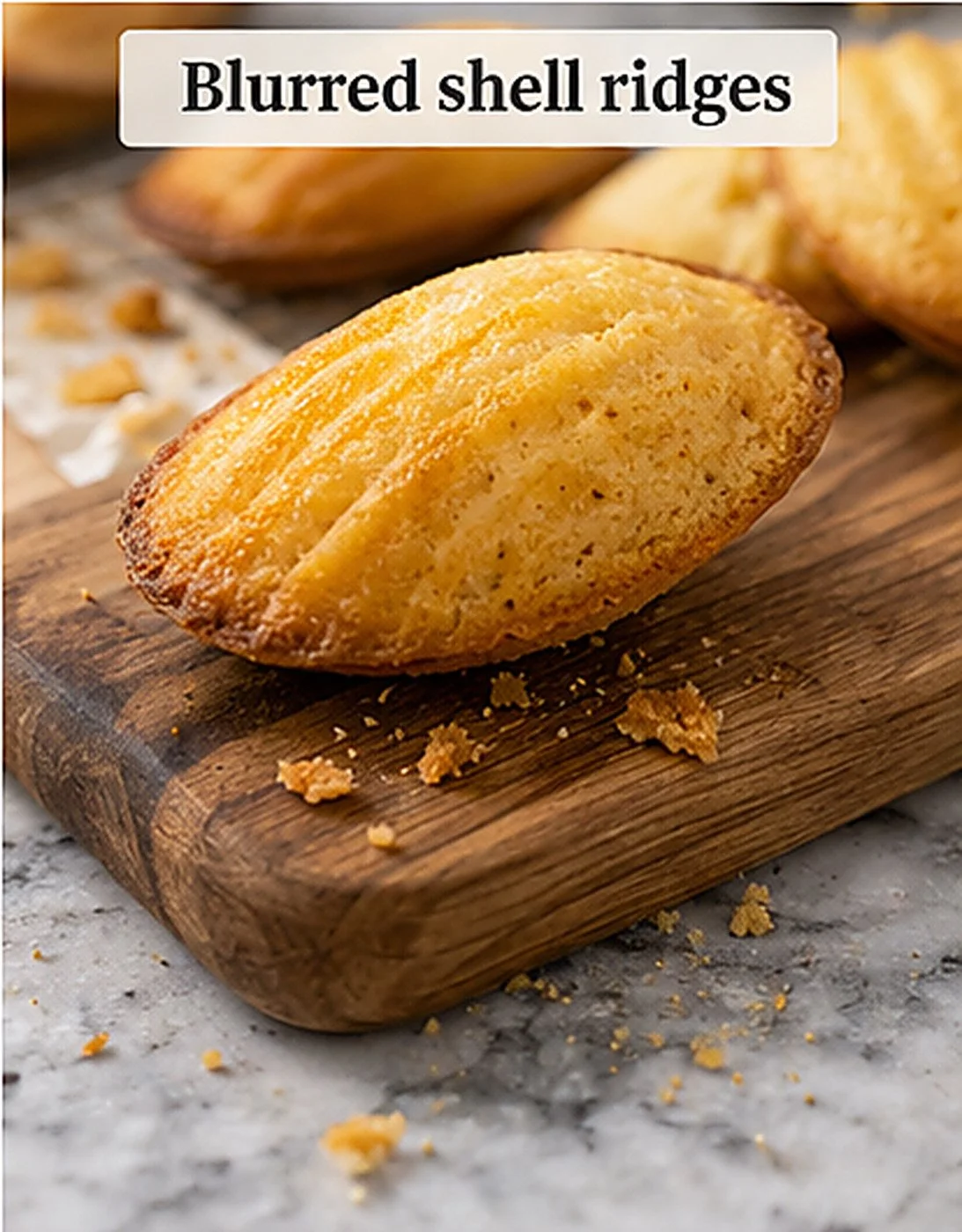
Symptoms: Crumb feels dry, lacks softness, or edges are overly hard.
Causes:
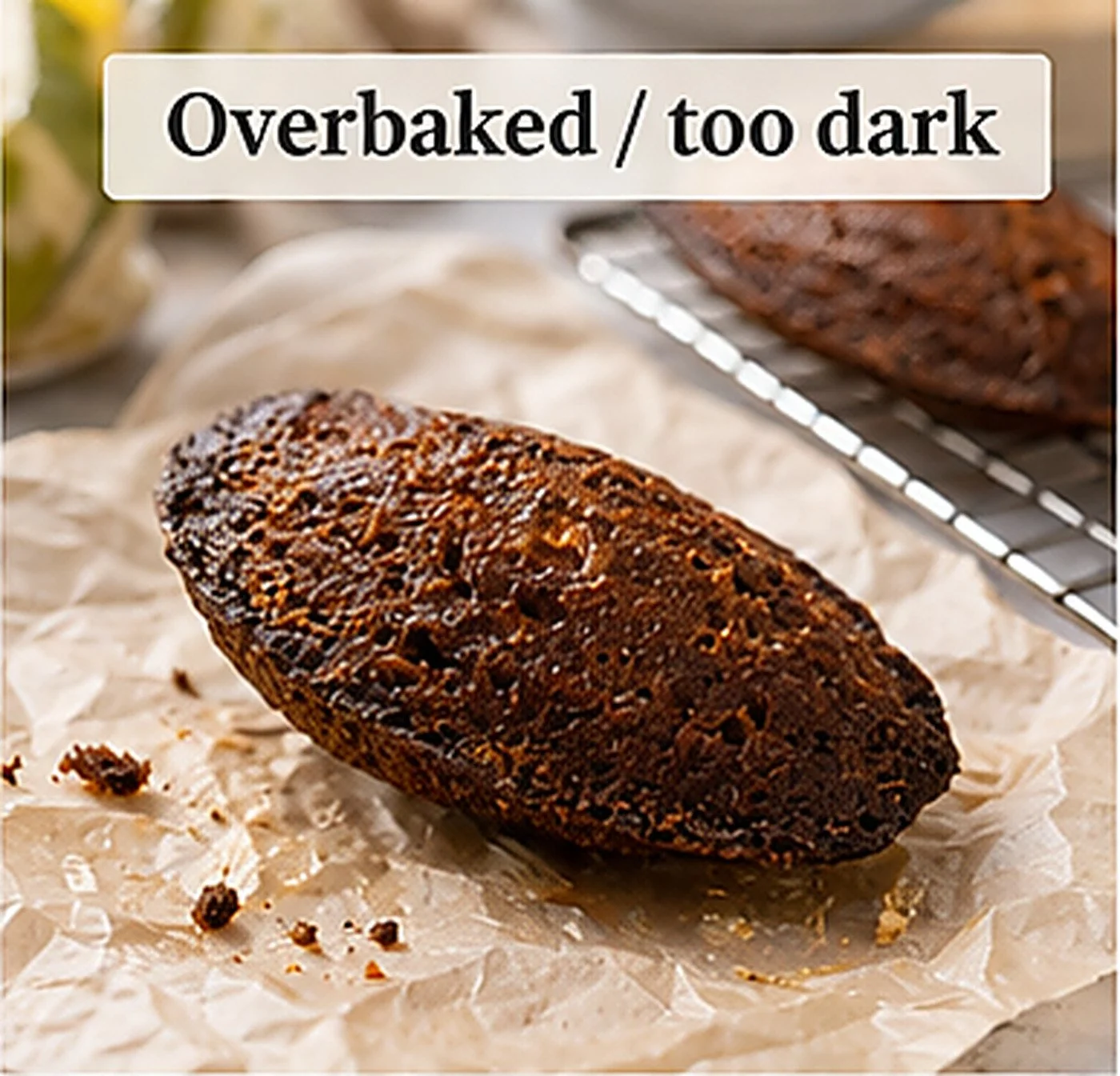
Overbaking.
Excess flour or improper cocoa powder substitution.
Oven temperature is too high.
Lack of moisture-retaining ingredients.
Solutions:
Watch the clock: Bake for 10–11 minutes only, or until the edges are just lightly golden.
Utilize honey: Ensure you are using honey in the recipe, as it significantly improves moisture retention.
Unmold instantly: Remove madeleines from the pan immediately after baking to stop the cooking process.
5. Pale or Uneven Coloring
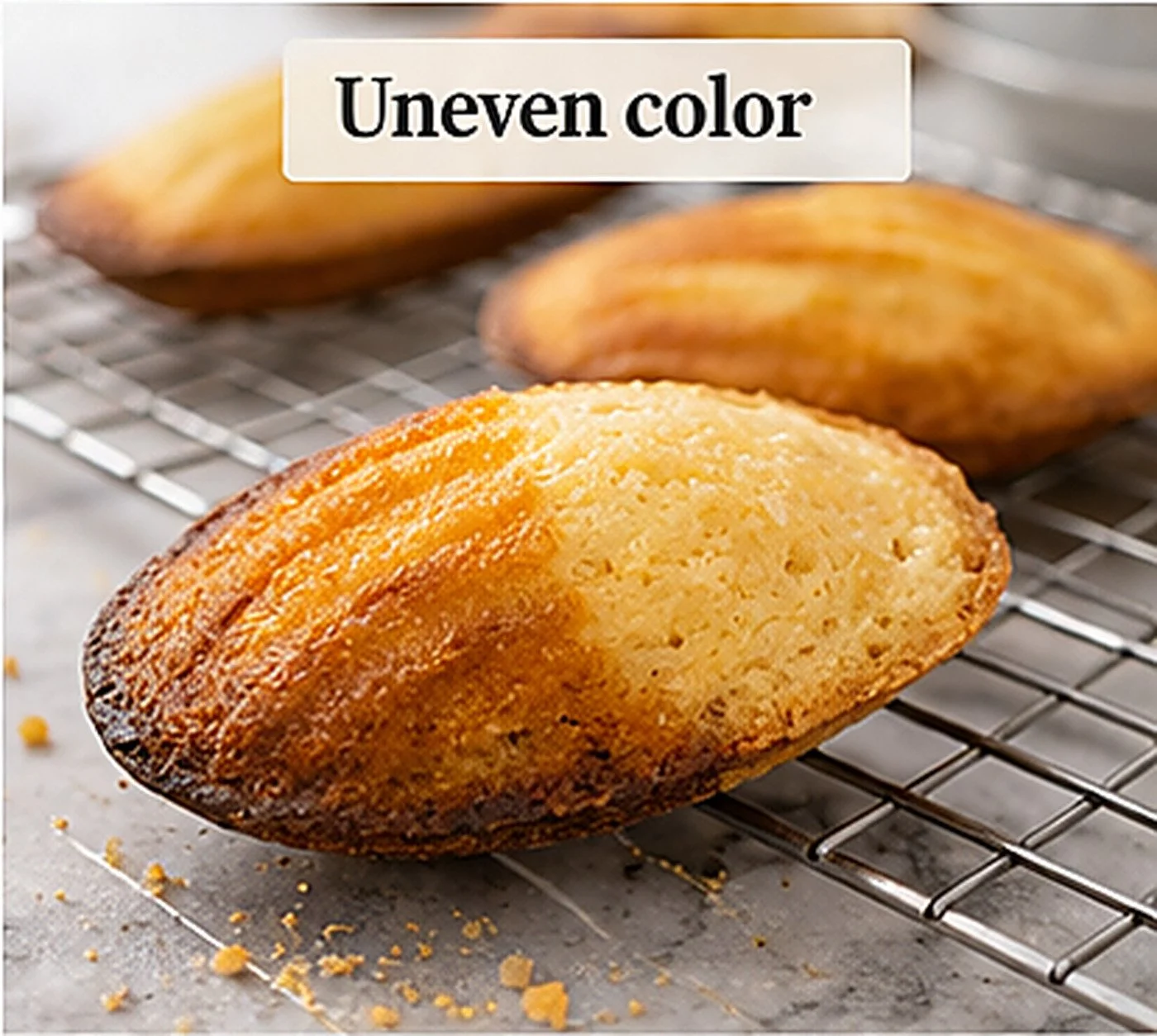
Symptoms: Light tops, uneven browning, or lack of defined golden edges.
Causes:
Oven temperature is too low.
Poor heat conduction (common with silicone molds).
Uneven butter and flour coating in the molds.
Solutions:
Choose metal: Use metal madeleine pans for the most efficient heat transfer and crisp edges.
Prep carefully: Butter and flour the molds evenly, tapping out any excess flour to prevent buildup in the ridges.
6. Sticking to the Pan
Symptoms: Madeleines tear or break during unmolding.
Causes:
Improper pan preparation.
Excess moisture buildup from pre-filling molds and letting them sit.
Waiting too long to unmold.
Solutions:
Prep on demand: Thoroughly butter and flour the molds just before you are ready to fill and bake.
Turn out hot: Unmold the madeleines as soon as they exit the oven.
7. Flat Flavor
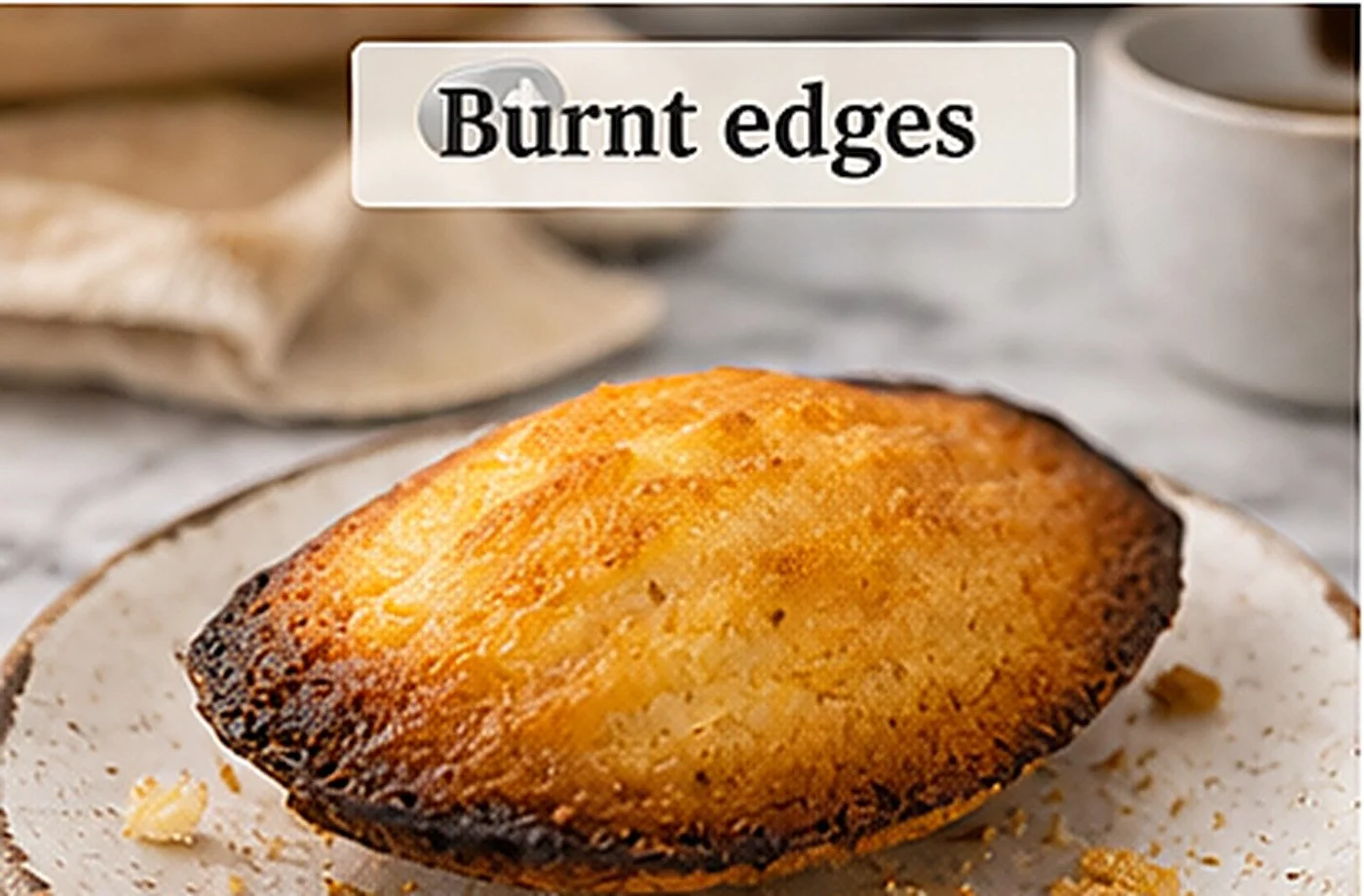
Symptoms: Bland taste, lack of depth, or no aroma.
Causes:
Skipping the brown butter step.
Low-quality butter or honey.
Insufficient resting time.
Solutions:
Properly brown the butter: Cook the butter until it reaches a clear, light amber stage with a nutty aroma.
Select quality: Use high-quality unsalted butter and genuine honey.
Do not rush the rest: Flavor development peaks during the 24-hour resting window.
8. Greasy Texture
Symptoms: Oily surface or heavy mouthfeel.
Causes:
Butter was not properly emulsified into the batter.
Batter was too warm before entering the oven.
Excess butter used to grease the molds.
Solutions:
Emulsify well: Mix the brown butter into the batter thoroughly while it is still fluid but not hot.
Keep it cold: Ensure the batter remains chilled until the moment of baking.
9. Uneven Shape or Poor Shell Definition
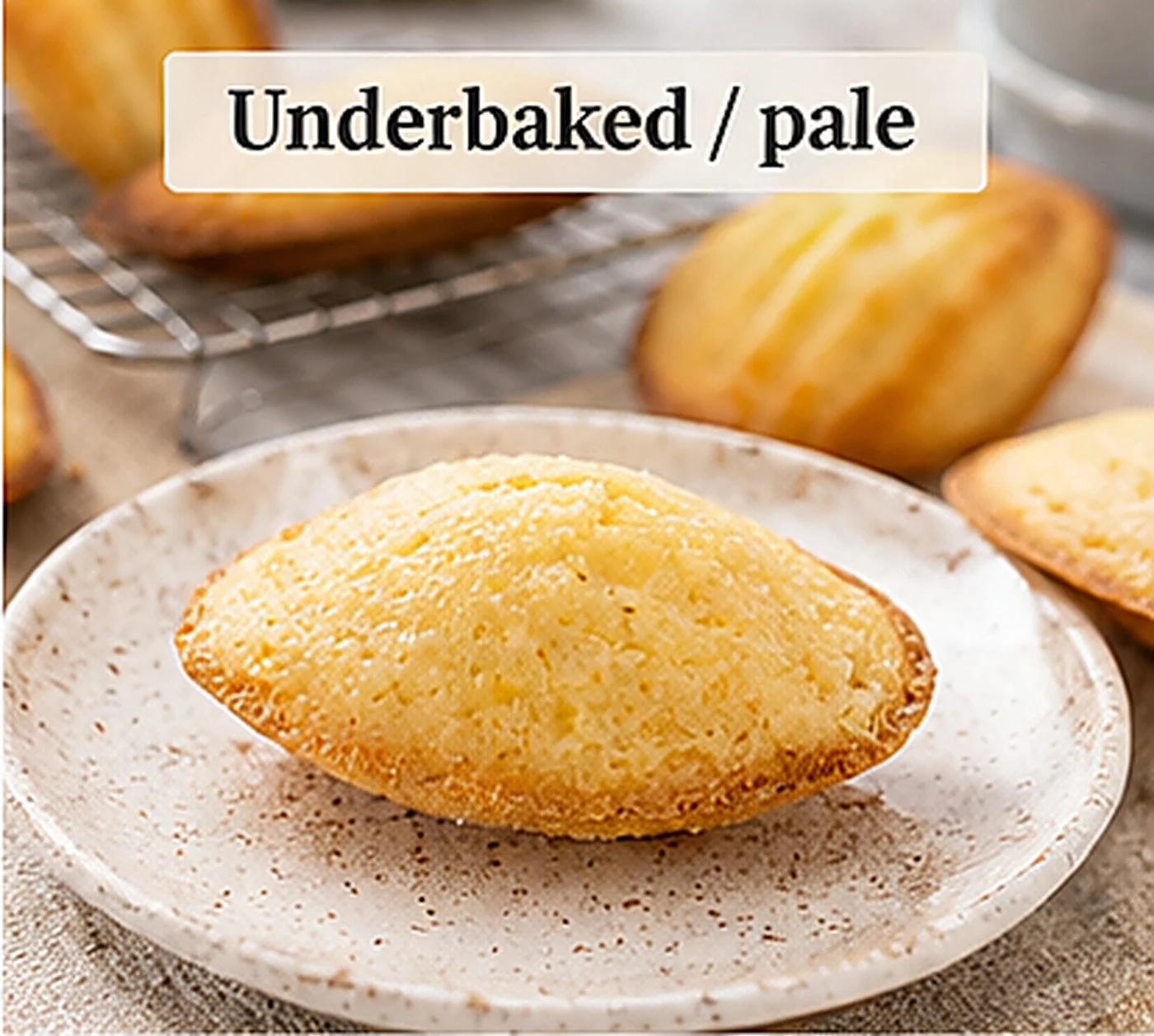
Symptoms: Blurred ridges, uneven spreading, or irregular forms.
Causes:
Overfilled molds.
Batter is too loose or warm.
Uneven oven heat.
Solutions:
Control the volume: Fill molds only ¾ full to allow for controlled expansion.
Check consistency: Ensure the batter is thick enough to hold its shape once portioned.
10. Batter Separates or Looks "Broken"
Symptoms: Oily streaks or uneven texture in the raw batter.
Causes:
Butter was added while too hot.
Improper mixing sequence.
Temperature imbalance between ingredients.
Solutions:
Cool the butter: Let the brown butter cool slightly before incorporating it.
Temperate ingredients: Ensure eggs and milk are at room temperature before mixing to prevent the fat from seizing.
11. Weak Rise Despite Correct Process
Symptoms: Minimal lift even with cold batter and a hot oven.
Causes:
Expired or weak baking powder.
Incorrect leavening ratio.
Batter rested too long (beyond the optimal 36-hour window).
Solutions:
Test your leavener: Always use fresh baking powder.
Measure by weight: For precision, aim for 5–6 g of leavening per standard batch.
12. Overly Crisp or Hard Edges
Symptoms: Edges are crunchy or brittle rather than delicate.
Causes:
Overbaking.
Excess sugar caramelization.
Batter was spread too thin in the mold.
Solutions:
Adjust bake time: Reduce time by 1–2 minutes if edges are darkening too quickly.
Check fill levels: Ensure the center of the mold is properly filled to balance the heat.
Consistent, high-quality madeleines rely on a few non-negotiable principles:
Brown butter for depth and aroma.
Gentle mixing to preserve the delicate sponge structure.
A full rest for hydration and flavor maturity.
Cold batter baked in a fully preheated oven for the "bump."
Immediate unmolding for a clean, professional finish.
When these elements are respected, the result is a refined madeleine with a defined shell, soft interior, and that signature, sought-after rise.

If you loved making this recipe, there’s so much more waiting for you in my book, Baking Magic: Awaken Your Inner Pastry Chef. It’s packed with simple tricks, pro tips, and show-stopping recipes to help you create unforgettable treats with ease.
Grab your copy on Amazon here and awaken your inner pastry chef today! 🍰✨
Disclaimer: Some links in this post are affiliate links, which means I may earn a small commission if you make a purchase—thank you for supporting my baking projects!