

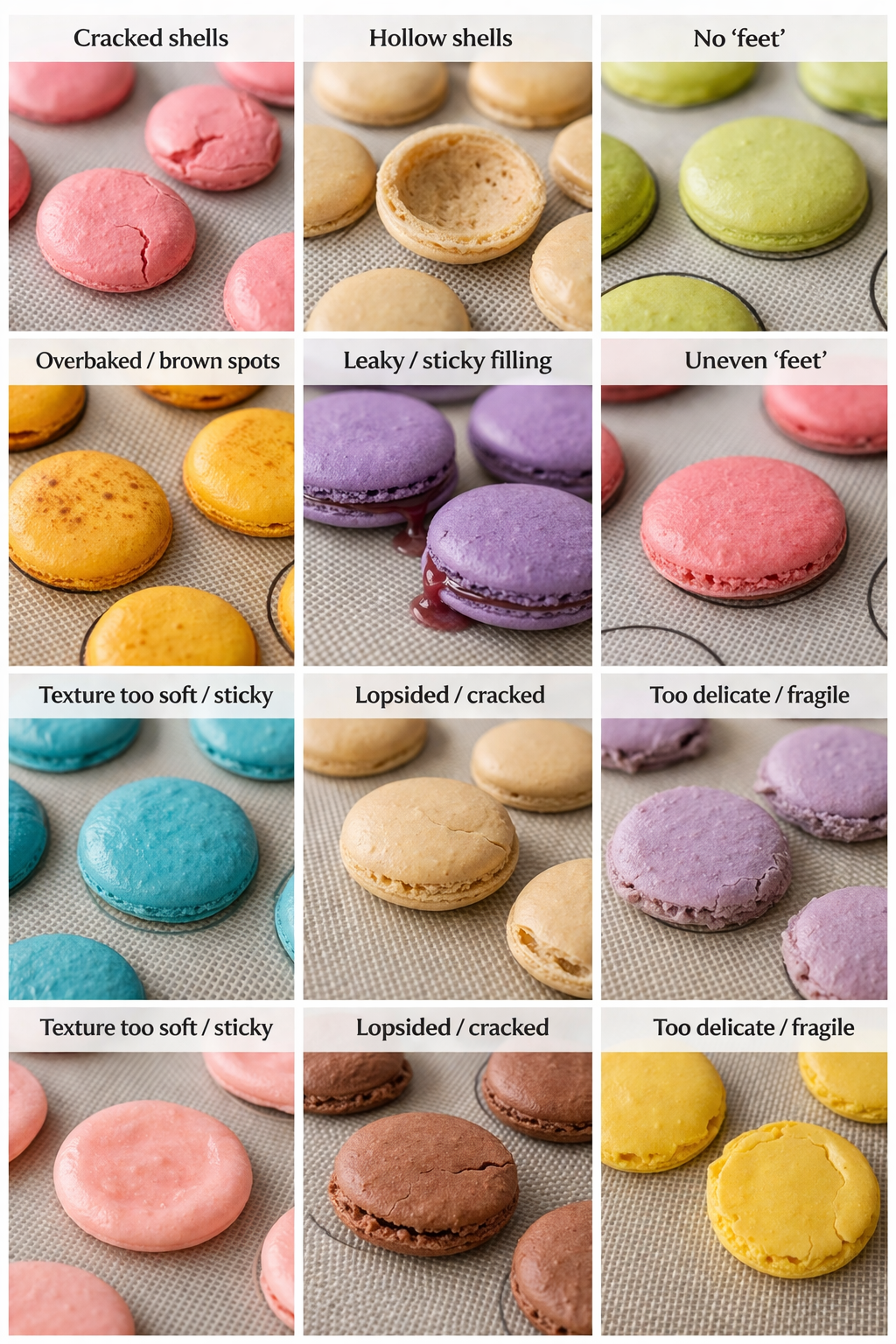
Macarons are one of the most technical pastries in baking. While the three primary methods—French, Italian, and Swiss—differ in technique, they share the same foundational principles: precise ratios, controlled meringue structure, proper macaronage, and exact baking conditions.
This guide consolidates all three methods into one cohesive troubleshooting system so you can diagnose and fix any issue with confidence.
PART 1: Understanding the Three Methods
French Method
Process: Egg whites whipped with sugar.
Characteristics: Least stable meringue, unless you use my proven simple technique of warm sugar that provides stable meringue with even carton egg whites.
Reference:Carton Egg Whites Macaron Shell Recipe
Suitability: Easiest time-saving classic method, suitable for even beginners.
Italian Method
Process: Hot sugar syrup poured into whipped egg whites.
Characteristics: Most stable meringue.
Suitability: Highly dependent on temperature precision.
Swiss Method
Process: Egg whites and sugar heated together, then whipped.
Characteristics: Medium stability.
Suitability: Balanced between French and Italian.
PART 2: Ingredient Problems
Oily Almond Flour
Symptoms: Batter spreads excessively; weak or no feet; blotchy shells.
Causes: Fat separation; improper storage; humidity exposure.
Fix: * Dry almond flour at 200°F (93°C) for 10 minutes.
Pulse with powdered sugar and sift twice.
Recommended Brands: These are the best, not oily, almond flour brands that I use almost every day without the need for drying:
Prevention: Store airtight in the freezer and use ultra-fine blanched almond flour.
Coarse Almond Flour
Symptoms: Bumpy tops; fragile shells.
Fix: Use finely ground almond flour only.
Powdered Sugar Issues
Symptoms: Grainy shells; uneven texture.
Cause: Cornstarch clumping or humidity exposure.
Fix: Sift thoroughly and dry ingredients if needed.
Incorrect Ratios
Symptoms: Dense shells (too much almond flour); fragile shells (too much sugar).
Fix: Always weigh ingredients in grams.
PART 3: Meringue Troubleshooting
French Method Meringue
Underwhipped: * Symptoms: Flat shells; no feet.
Fix: Whip to stiff glossy peaks.
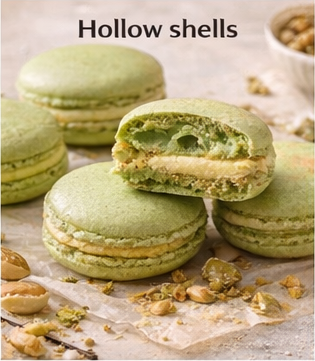
Overwhipped: * Symptoms: Dry, clumpy meringue; hollow shells.
Fix: Stop at glossy stiff peaks, not dry.
Grease Contamination: * Symptoms: Egg whites won’t whip.
Fix: Clean bowl with vinegar or lemon juice.
Italian Method Meringue
Syrup Too Hot: * Symptoms: Dry meringue; hollow shells.
Fix: Cook syrup to 244–246°F (118–119°C).
Syrup Too Cool: * Symptoms: Weak meringue; flat shells.
Fix: Do not pour below 238°F (114°C).
Improper Pouring: * Symptoms: Collapsed meringue; sugar threads.
Fix: Pour slowly down the side of the bowl, not onto the whisk.
Meringue Too Warm: * Symptoms: Runny batter.
Fix: Whip until the bowl is just warm, not hot.
Underwhipped / Overwhipped: Same structural issues as the French method, but more sensitive due to syrup integration.
Swiss Method Meringue
Overheated Egg Whites: * Symptoms: Grainy or scrambled texture.
Fix: Heat only to 120–140°F (49–60°C).
Sugar Not Dissolved: * Symptoms: Grainy shells; weak structure.
Fix: Heat until the mixture is smooth to the touch.
Underwhipped: * Symptoms: Flat shells; no feet.
Overwhipped: * Symptoms: Dry meringue; hollow shells.
Bowl Too Warm: * Symptoms: Loose batter.
Fix: Cool slightly before folding.
PART 4: Macaronage (Folding)
Undermixed Batter
Symptoms: Pointed tops; rough shells; small feet.
Fix: Fold until batter flows like lava; the ribbon should settle within 10–15 seconds.
Overmixed Batter
Symptoms: Spreading shells; no feet; thin structure.
Fix: No recovery; start over.
Prevention: Check batter consistency frequently during folding.
PART 5: Piping & Resting
Air Bubbles
Symptoms: Cracks; holes.
Fix: Tap trays firmly and pop bubbles with a toothpick.
No Skin Formed
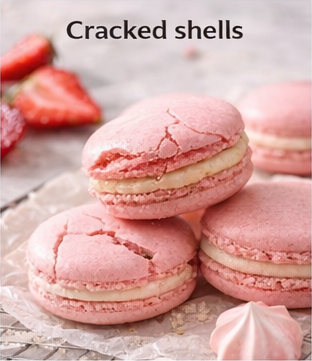
Symptoms: Cracked or exploding shells.
Cause: High humidity or insufficient resting.
Fix: Rest until dry to the touch.
PART 6: Oven Troubleshooting
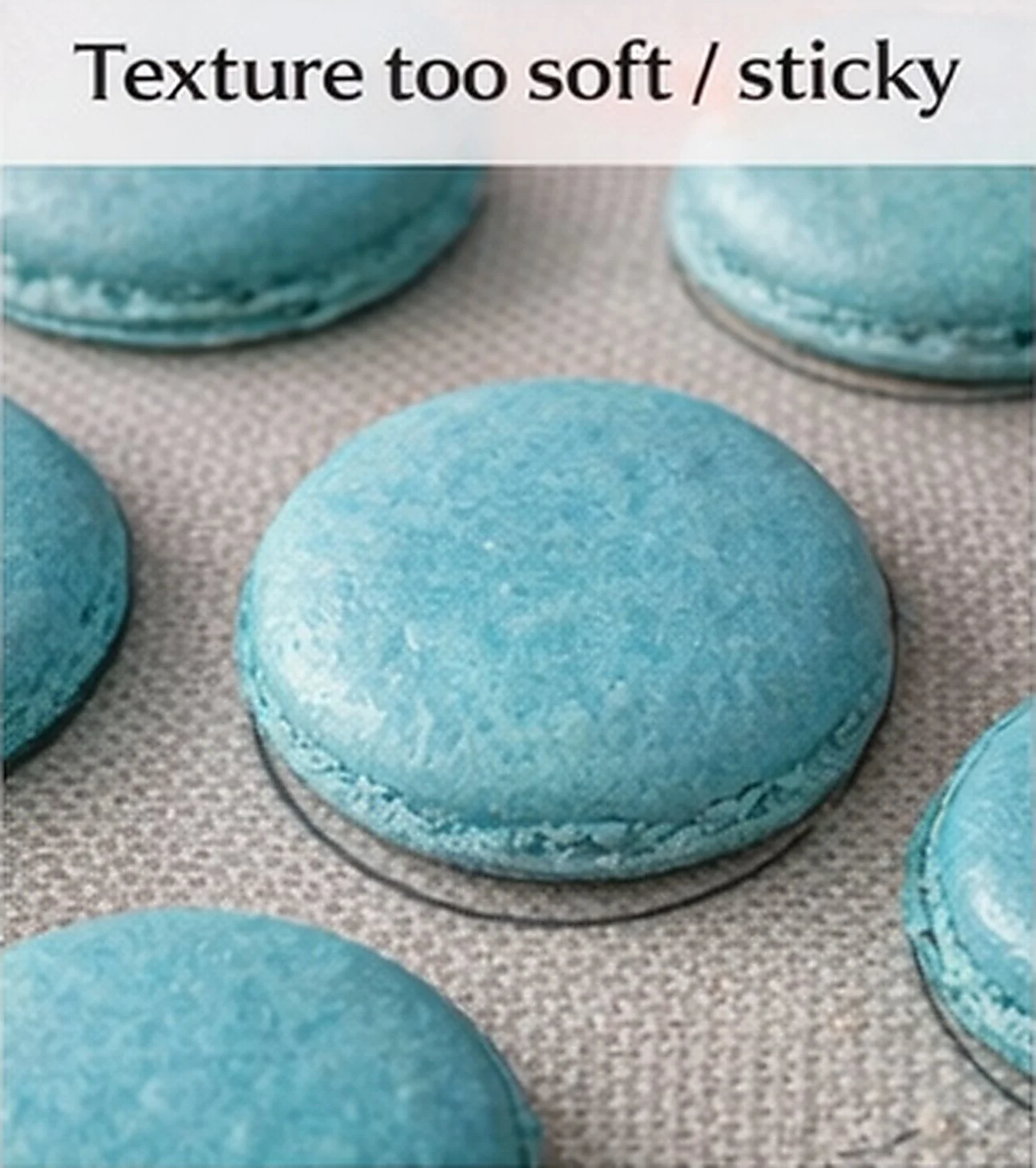
Cracked Tops: Causes include the oven being too hot, no skin formation, or air bubbles. Fix: Lower oven by 10–15°F.
No Feet: Causes include weak meringue, low oven temperature, or overmixed batter. Fix: Increase oven temperature slightly and strengthen meringue.
Hollow Shells: Causes include overwhipped meringue, oven too hot, or overbaking. Fix: Lower oven temperature, reduce bake time, and allow shells to mature after filling.
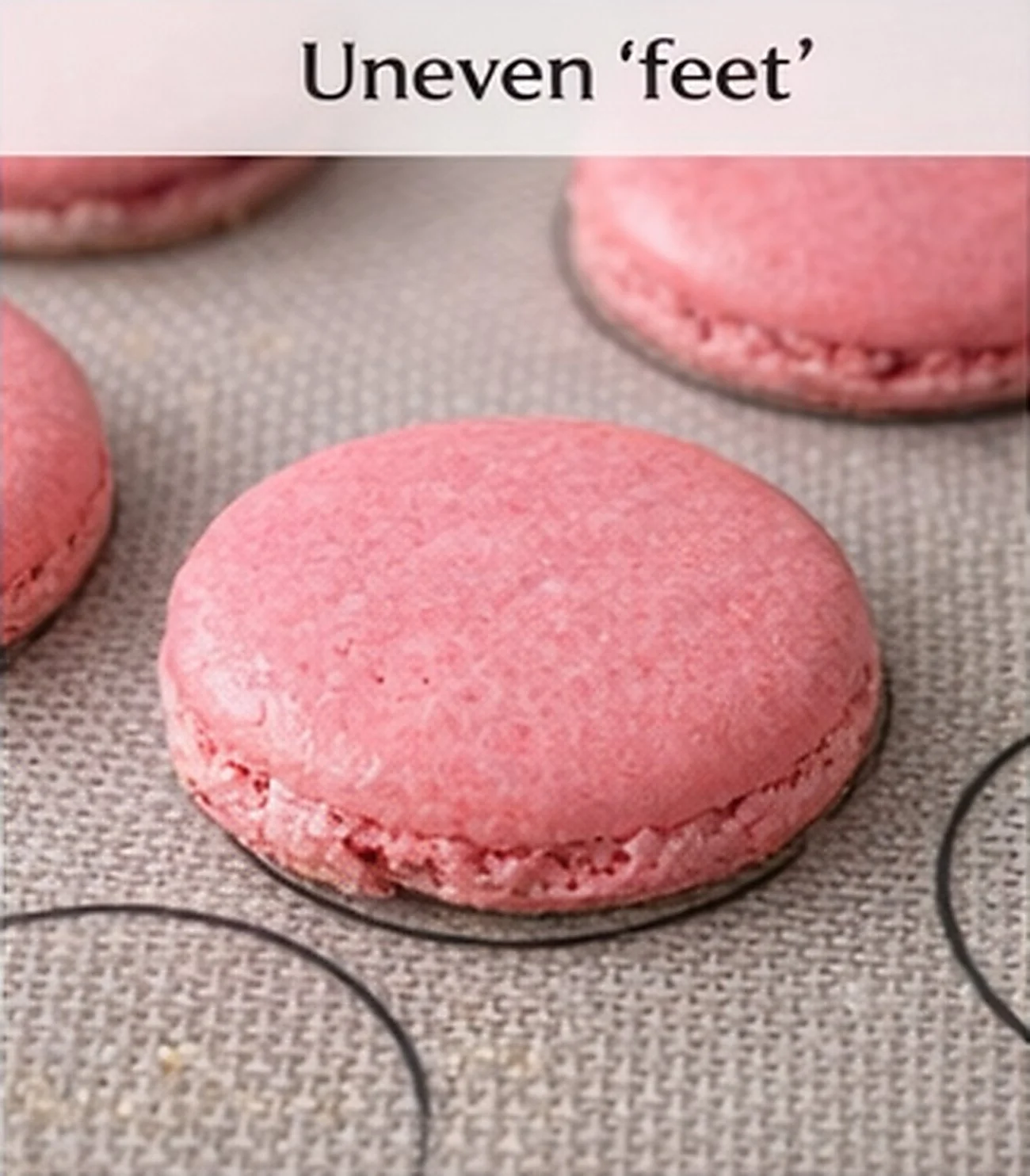
Lopsided Feet: Cause is usually uneven airflow. Fix: Rotate tray during baking or use a double tray.
Spreading Shells: Cause is overmixed batter or warm meringue. Fix: Ensure proper batter consistency and temperature.
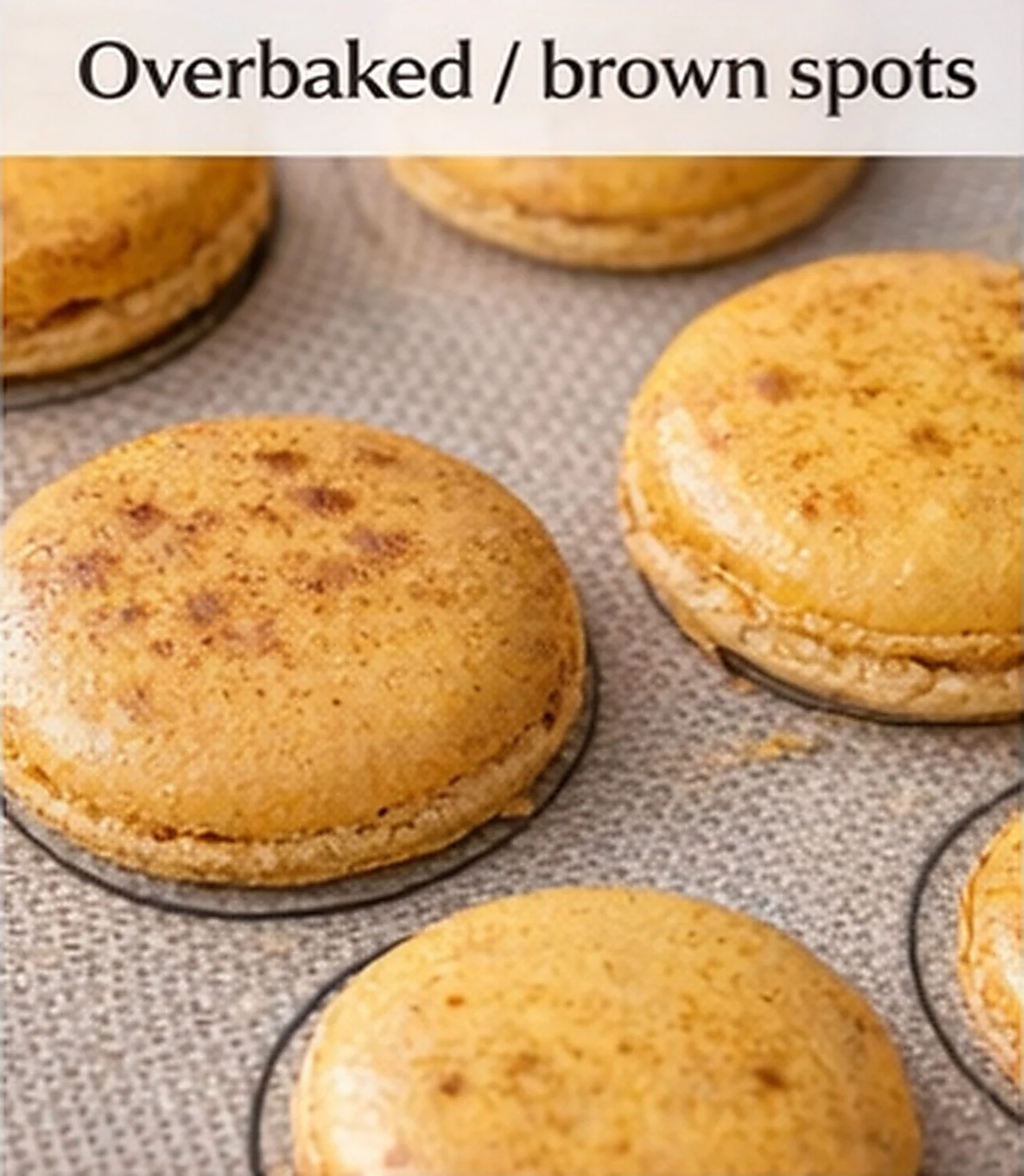
Overly Browned Shells: Cause is top heat being too strong. Fix: Lower rack position or use a double tray.
Sticking to Surface: Cause is underbaking. Fix: Bake 1–2 minutes longer and cool completely before removing.
PART 7: After Baking
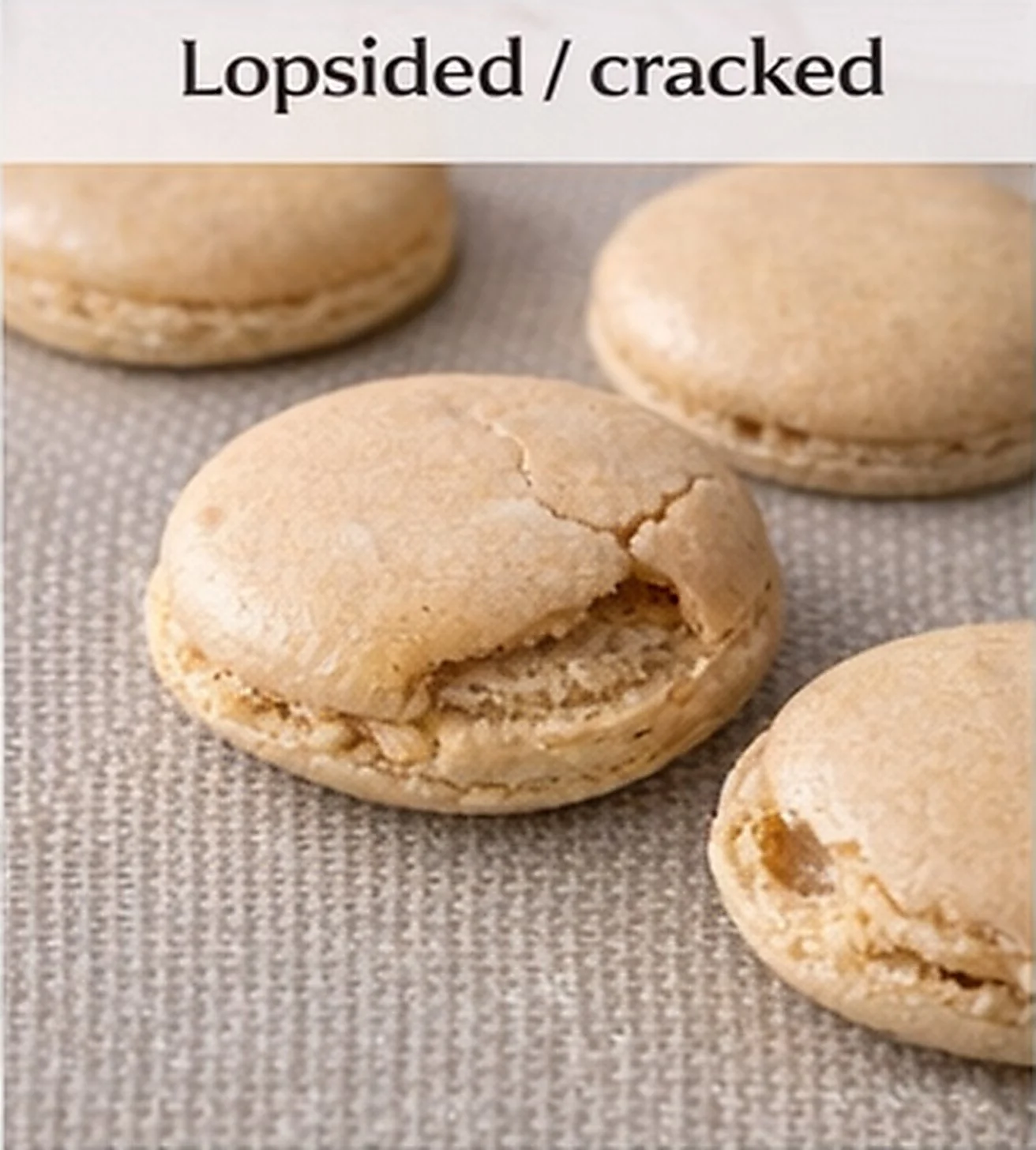
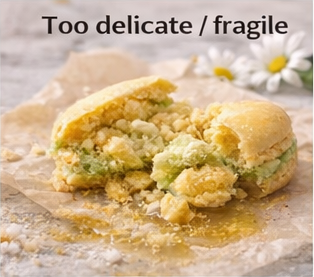
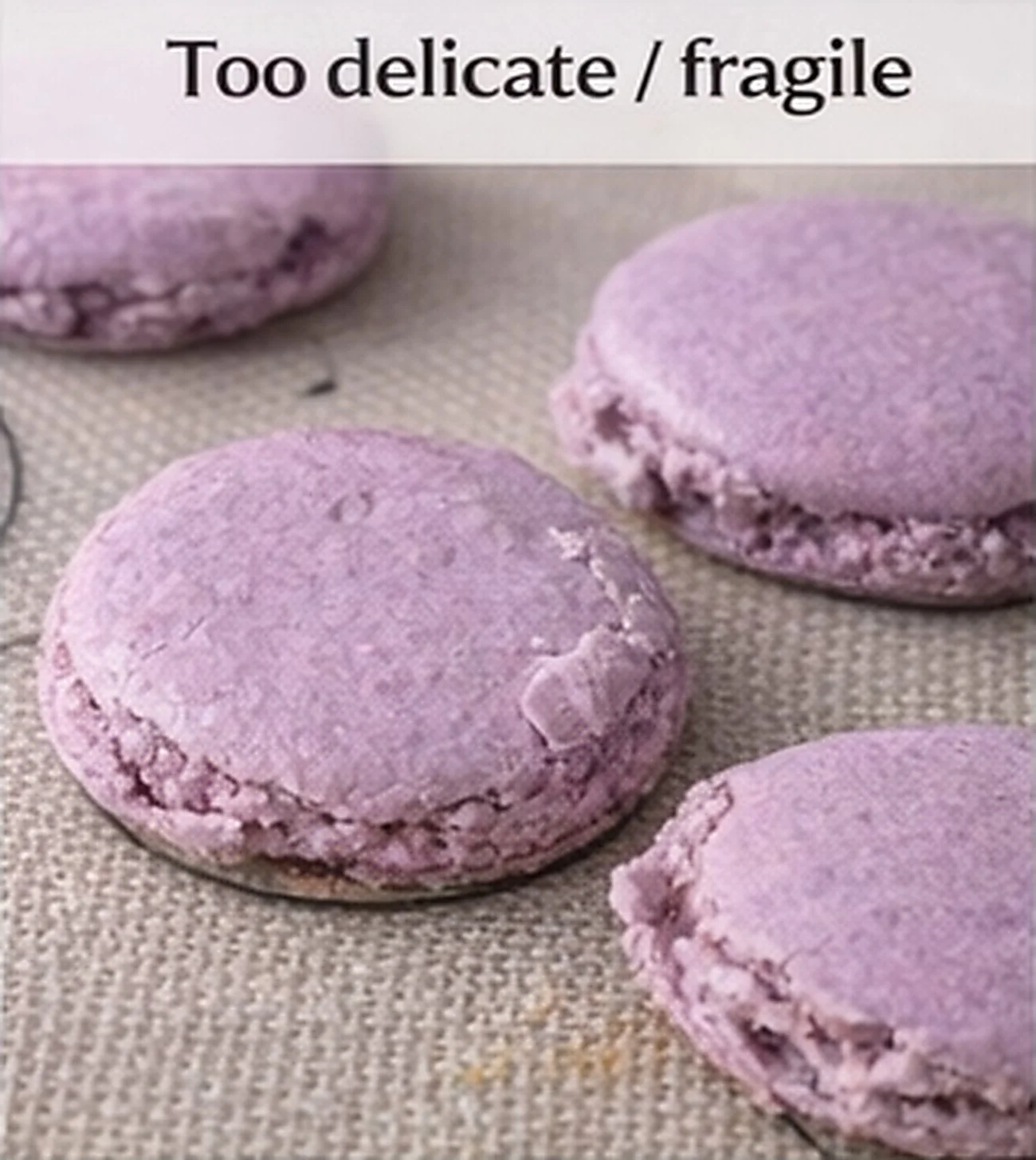
Fragile Shells: Caused by underbaking or a weak structure.
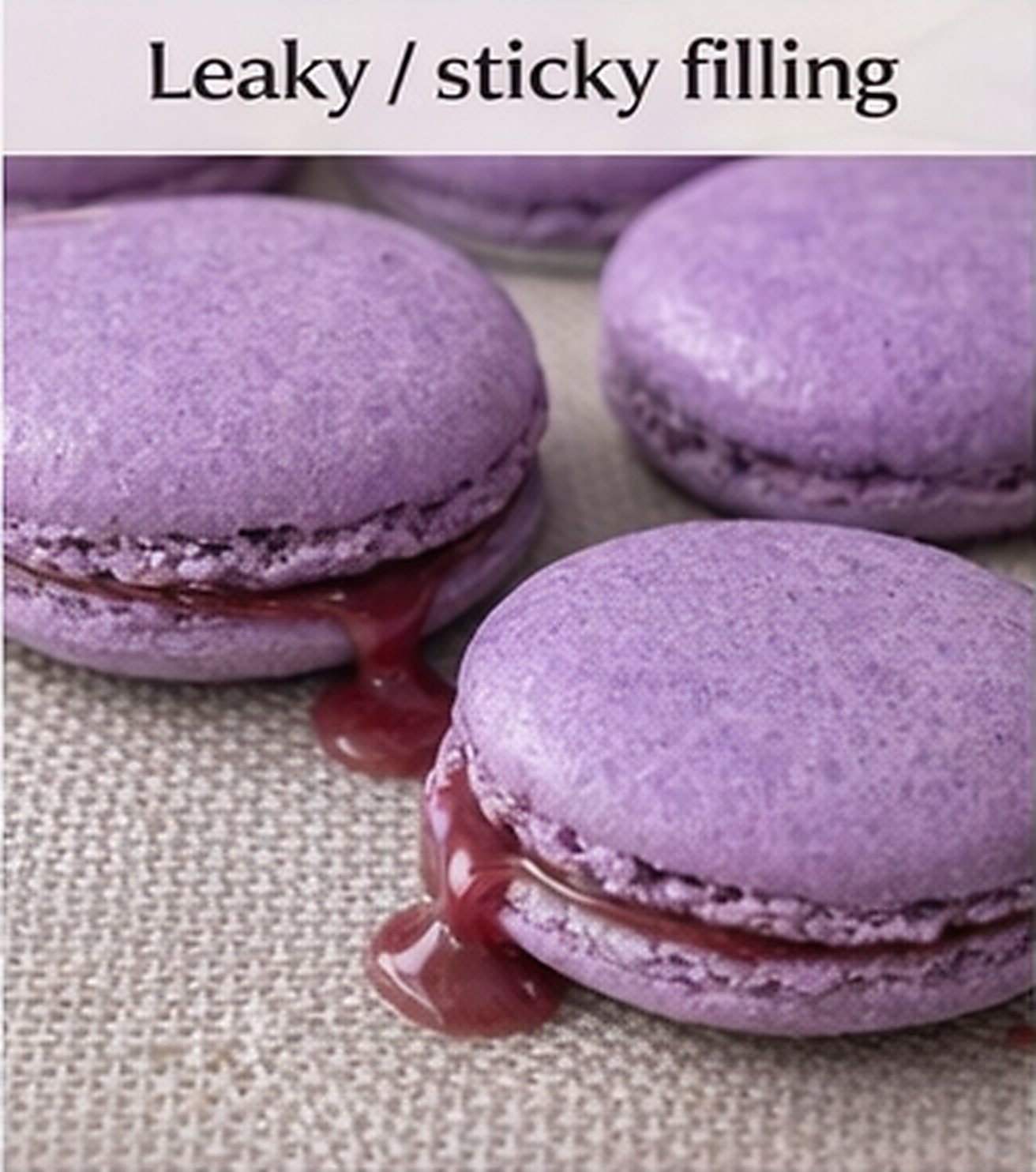
Sticky Interiors: Caused by humidity or underbaking.
Hollow but Smooth Shells: Caused by meringue imbalance or oven temperature. Fix: Adjust temperature and whipping stage.
PART 8: Environmental Control
| Factor | Ideal Range |
|---|---|
| Humidity | Below 50% |
| Room Temperature | 68–72°F |
| Rest Time | 20–60 minutes |
| Oven Type | Convection (low fan) or conventional |
PART 9: Master Diagnostic Chart
| Problem | Likely Cause | Adjustment |
|---|---|---|
| Cracked tops | Oven too hot | Lower temperature |
| No feet | Weak meringue | Whip more |
| Hollow shells | Overwhipped meringue | Stop earlier |
| Spreading shells | Overmixed batter | Fold less |
| Sticky bottoms | Underbaked | Bake longer |
PART 10: Method Comparison
| Method | Stability | Difficulty | Key Risk |
|---|---|---|---|
| French | Low | High | Meringue weakness |
| Swiss | Medium | Medium | Overheating or overwhipping |
| Italian | High | Advanced | Syrup temperature |
PROFESSIONAL NOTES
Perfect macarons depend on controlling four key pillars: meringue structure, batter consistency, oven temperature, and environmental conditions. Always change one variable at a time when troubleshooting and track every batch, including humidity, oven temperature, fold count, and bake time. Consistency is achieved through precision and repetition.

If you loved making this recipe, there’s so much more waiting for you in my book, Baking Magic: Awaken Your Inner Pastry Chef. It’s packed with simple tricks, pro tips, and show-stopping recipes to help you create unforgettable treats with ease.
Grab your copy on Amazon here and awaken your inner pastry chef today! 🍰✨
Disclaimer: Some links in this post are affiliate links, which means I may earn a small commission if you make a purchase—thank you for supporting my baking projects!